
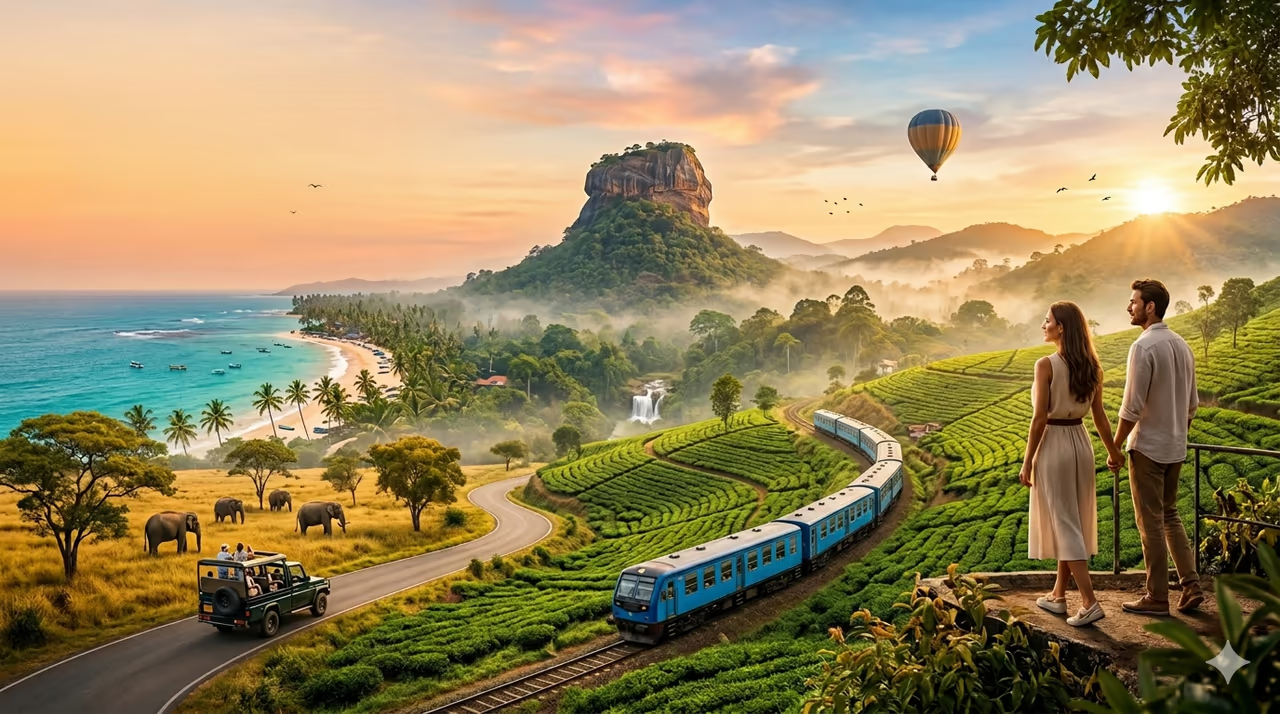
Ten days is enough for a rewarding first journey through Sri Lanka if the route is disciplined. The island looks small on a map, but mountain roads, town traffic, scenic stops, and weather can make travel slower than expected. A good itinerary therefore connects neighbouring regions instead of collecting distant landmarks.
A balanced first-time route: arrival coast or Colombo → Cultural Triangle → Kandy → hill country → wildlife → Galle and the south coast. It combines heritage, scenery, wildlife, food, and beach time without changing hotels every night.
Before choosing the route
This itinerary works best from roughly December to April, when the south and west coasts are commonly in season. From May to September, keep the Cultural Triangle but consider replacing the south-coast finish with Trincomalee, Nilaveli, Pasikuda, or another east-coast base.
Ten days should not include every famous place. Jaffna, Wilpattu, Arugam Bay, Ella, Mirissa, and Anuradhapura are all worthwhile, but combining all of them creates a holiday dominated by transfers. Choose one coherent arc and leave a reason to return.
Day 1: Arrive and recover near the airport or Colombo
After a long flight, use the first day as a soft landing. Negombo is convenient for an airport-adjacent overnight, while Colombo suits travellers who want restaurants, markets, galleries, and an introduction to modern Sri Lankan city life.
Do not schedule a major cross-island drive immediately after a late arrival. Meet your driver, obtain cash or a local payment option, check connectivity, and sleep properly before beginning the circuit.
Day 2: Travel to the Cultural Triangle via Dambulla
Drive inland toward Dambulla and Sigiriya. If arrival time and energy allow, visit the Rangiri Dambulla Cave Temple, a UNESCO World Heritage site known for its long religious history and cave interiors. Dress respectfully at active religious sites: shoulders and knees should be covered, hats removed, and footwear left where instructed.
Stay for two nights around Sigiriya, Habarana, or Dambulla. This single base reduces packing and gives access to several important sites.
Day 3: Sigiriya and an unhurried afternoon
Start early at Sigiriya to avoid the strongest heat. The ancient city is one of Sri Lanka’s eight UNESCO World Heritage properties and combines a dramatic rock citadel with gardens, water engineering, paintings, and far-reaching views.
Keep the afternoon lighter. Options include a village-scale food experience, a quiet hotel break, or a nature drive in the wider Habarana area. Travellers who prefer another climb can consider Pidurangala, but it is a separate experience with rougher sections and should not be treated as a substitute for understanding Sigiriya itself.
Day 4: Choose Polonnaruwa or Anuradhapura, then continue to Kandy
For a ten-day route, Polonnaruwa usually fits more efficiently between Sigiriya and Kandy. Its archaeological landscape includes royal buildings, reservoirs, monasteries, and sculpture spread across a broad area. A knowledgeable site guide adds essential context that signs alone cannot provide.
Anuradhapura is equally significant but works better when the itinerary allows another night in the north-central region. Whichever ancient capital you choose, avoid rushing both into a single day.
Day 5: Kandy and the central highlands
Kandy is Sri Lanka’s historic hill capital and another UNESCO-listed city. Visit the Temple of the Sacred Tooth Relic with respect for worshippers and ceremony times. Build the rest of the day around what interests you: the lake, a market, the Royal Botanic Gardens at Peradeniya, or a carefully selected cultural performance.
Kandy traffic can be slow, so group nearby activities together. One focused day is more satisfying than crossing the city repeatedly for disconnected stops.
Day 6: Kandy to Ella or a quieter hill-country base
The journey into tea country is part of the experience. Rail offers atmosphere and mountain views; a private vehicle offers control over stops, luggage, and timing. Train reservations and schedules can change, so confirm them through current official or station information rather than relying on an old blog post.
Ella is lively and convenient, while Haputale can feel quieter. Nuwara Eliya suits travellers interested in a cooler climate, gardens, and tea-country history. In a ten-day itinerary, choose one main hill-country base rather than trying to sleep in all three.
Day 7: Walk, tea country, and local landscape
Use a full day for one or two meaningful experiences: a guided tea visit, an early walk, a waterfall viewpoint, or a village lunch. Avoid stacking several hikes with a long onward drive. Weather changes quickly in the highlands, so carry water, sun protection, a light layer, and rain protection.
When visiting a working tea estate, choose an experience that explains cultivation and production rather than treating workers as a photo backdrop. Ask before photographing people.
Day 8: Hill country to Udawalawe or Yala
Descend toward the southern plains for a wildlife experience. Udawalawe is a practical option for travellers prioritising elephants and an onward route to the south coast. Yala is better known for leopard habitat but can be busier and generally involves a longer detour depending on your starting point and hotel.
Choose one park, not two rushed safaris. Wildlife is never guaranteed. Use an authorised vehicle, keep voices low, give animals space, and reject any driver who crowds or pursues them for a photograph.
Day 9: Galle Fort and the south coast
Continue to Galle, whose fortified old town is UNESCO listed. Walk the ramparts when the heat softens, then explore streets, courtyards, places of worship, and buildings that still form a living town rather than an open-air museum.
Stay inside or near the fort for atmosphere, or choose a beach base such as Unawatuna, Weligama, Mirissa, or a quieter stretch farther east. Pick the beach for the experience you want—swimming, surfing, restaurants, or seclusion—not simply because it is famous.
Day 10: A slow morning and departure
Keep the final morning light. A relaxed breakfast, short coastal walk, or small craft stop is safer than a major excursion before a flight. Allow a generous airport buffer; expressways help on parts of the route, but traffic and weather remain variable.
If the international flight departs early, spend the previous night closer to Colombo or the airport instead of attempting a dawn transfer from the south coast.
Route at a glance
- Arrival: Negombo or Colombo
- Dambulla and Sigiriya
- Sigiriya and surrounding countryside
- Polonnaruwa, then Kandy
- Kandy
- Travel into the hill country
- Ella, Haputale, or Nuwara Eliya
- Udawalawe or Yala
- Galle and the south coast
- Departure
How to adapt the itinerary
For families
Reduce the number of long walks, keep the two-night Cultural Triangle stay, and add pool or beach time. Udawalawe often fits a family route efficiently. Confirm child-seat availability before arrival rather than assuming it is standard.
For wildlife-focused travellers
Add a second night near one park and remove either Kandy or a beach night. A slower safari plan creates room for different habitats and reduces pressure to force sightings into one drive.
For beaches and surfing
Limit the Cultural Triangle to two nights and add the saved night to the coast. Match the coast to the season: south and west are generally favoured in the northern winter, while the east is usually stronger from May to September.
For heritage enthusiasts
Add Anuradhapura and another night in the Cultural Triangle. Consider removing the safari or shortening the beach stay so archaeological visits are not reduced to quick photo stops.
Transport choices
- Private vehicle with driver: best for door-to-door flexibility, luggage, early starts, and mixed regional routes.
- Train: memorable for selected journeys, especially through the highlands, but less predictable for a tightly timed circuit.
- Bus: extensive and economical, but a ten-day multi-region itinerary requires more planning and lighter luggage.
- Hybrid approach: use a driver for the circuit and keep one scenic rail segment when reservations and timing work.
Sri Lanka Tourism describes the island as having connected road, rail, and air networks. The right combination depends on comfort, budget, group size, and how much schedule certainty you need.
Responsible travel notes
- Dress and behave respectfully at temples and active religious sites.
- Use refillable water bottles where safe refill points are available.
- Do not touch, feed, crowd, or pose with captive wildlife.
- Hire qualified local guides where interpretation materially improves a site visit.
- Ask before photographing people, ceremonies, or working communities.
- Keep money in local communities through independent restaurants, craftspeople, and locally owned stays.
Official planning sources
- Sri Lanka Tourism: suggested itineraries
- Sri Lanka Tourism: transport overview
- UNESCO: Sri Lanka World Heritage list
- Department of Wildlife Conservation: protected areas
Opening hours, train operations, park access, and local conditions can change. Confirm time-sensitive details shortly before travel.